
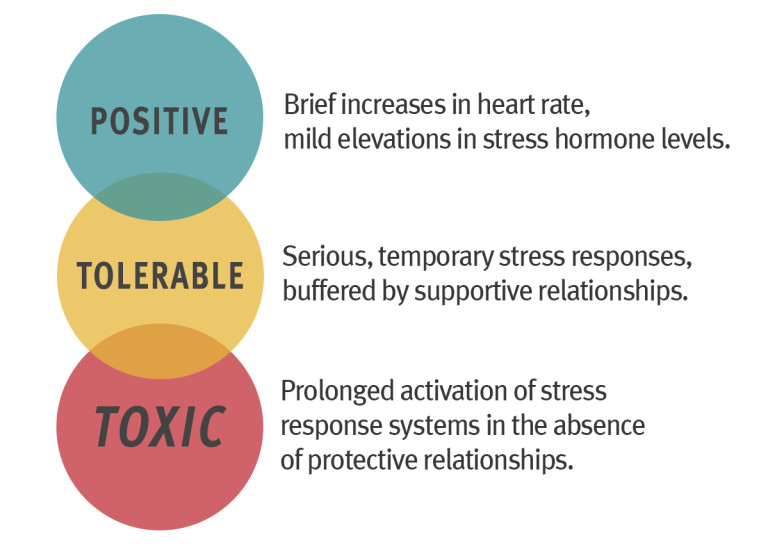
The American Academy of Pediatrics released very important report called “The Lifelong Effects of Early Childhood Adversity and Toxic Stress”. They also published appropriate policy statement. This report defines 3 types of stress responses in children:
- Positive stress response – this level of stress is low. Here parent plays a crucial role as he helps the child to cope. Examples of positive stress responses are” “immunization, dealing with frustration or the anxiety that child experiences on their first day at childcare”. Authors of the report says “when buffered by an environment of stable and supportive relationships, positive stress responses are a growth-promoting element of a normal development. As such, they provide important opportunities to observe, learn and practice healthy, adaptive responses to adverse exercises”. This stress elevates hormones level and slightly increases heart rate.
- Tolerable stress response – this stress is caused by non-everyday events like divorce of the parents or natural disaster. If child is supported by strong relationship with adult and his presence, the child adopts and cope with changes in his life. In particular circumstances, tolerable stress can become even positive stress response.
- Toxic stress response – is caused by “strong, frequent or prolonged activation of the body’s stress response systems in the absence of the buffering protection of suportive adult relationship”. Examples are: child abuse or child neglect, maternal depression, parental substance abuse. This type of stress experienced in early childchood can result in brain circuitry and affect development of normal stress regulators. As this stress is very high, it can have severe impact on immune system, cause inflammation and can lead to chronic disease.
Even the most radical settling techniqe is not classified as Toxic stress response. It is rather considered as Positive to tolerable stress responses so sleep training methods are not causing any negative changes is brain. This stress, increase in cortisol are short and child is always supported by caring adult. This is good to know for parents.
For more you can go to: https://developingchild.harvard.edu/science/key-concepts/toxic-stress/